
Friction Welding Buyer's Guide
A Practical Resource for Engineers,
Operations Leaders, and Procurement Teams
Introduction
Most people reading this are in one of two places. Something in the current welding process is broken (parts scrapping, tolerances failing, a bottleneck about to derail a launch) or they are building the business case for a better joining technology and need facts to support it.
This guide is written for the full buying committee: the engineer who owns the technical problem, the operations or program manager watching the P&L, and the procurement lead who has to justify the spend. Friction welding affects all three roles differently, and each section is written with that in mind.
What follows is a practical framework covering the technology, procurement options, engagement structure, and the internal approval process.
Why Friction Welding
MIG, TIG, and submerged arc welding have been the backbone of industrial manufacturing for decades. As component designs get more complex, materials more exotic, and quality thresholds tighter, the limitations of fusion processes have started showing up as real operational problems.
The Solid-State Difference
Fusion welding melts parent materials to achieve coalescence. That reliance on the liquidus state opens the door to gas porosity, solidification cracking, slag inclusions, and weakened Heat-Affected Zones (HAZ) that reduce fatigue resistance and tensile strength. Because the process depends on manual technique, output quality tracks with operator consistency.
Friction welding is a 100% solid-state joining technology. Instead of melting materials, it uses controlled mechanical friction and compressive force to plasticize the interface, generating a forged-quality metallurgical bond without ever reaching the liquidus state. The resulting joint frequently matches or exceeds parent material strength, with no thermodynamic defects. Because the entire process runs on machine parameters, every weld is identical to the last. The ten-thousandth part off the machine is metallurgically indistinguishable from the first.
The Business Case in Four Pillars
1. Raw Material Optimization
Traditional subtractive manufacturing carves complex components from expensive monolithic blocks, turning significant capital into chips and offcuts. Friction welding enables near-net shape manufacturing: joining standard bar stock, extrusions, or tubes to create tailored blanks. The reduction in raw material consumption is immediate and direct.
2. Cycle Time Compression
Friction welding runs between two and one hundred times faster than conventional fusion methods. Rotary friction welding has a built-in self-cleaning mechanism: surface contaminants get expelled into the weld flash, eliminating pre-weld prep work. Localized thermal input also minimizes distortion.
3. Quality Assurance and Risk
Friction welding addresses quality at the process level. Servo-controls, PLCs, and closed-loop sensor feedback hold every weld parameter (rotational velocity, axial pressure, upset displacement) to validated tolerances. Quality becomes more consistent and predictable, reducing scrap rates.
4. ESG and Sustainability Alignment
Friction welding generates no hazardous fumes, no shielding gas emissions, and requires no consumable materials. The process uses as little as 20% of the energy that traditional arc welding draws. For organizations working toward ESG targets, the improvement is measurable.
The Core Value Proposition
Friction welding replaces a manual, variable, consumable-heavy process with an automated, repeatable, closed-loop system. The financial impact shows up across raw material costs, cycle times, scrap rates, labor, and compliance risk at the same time.
Technology Modalities
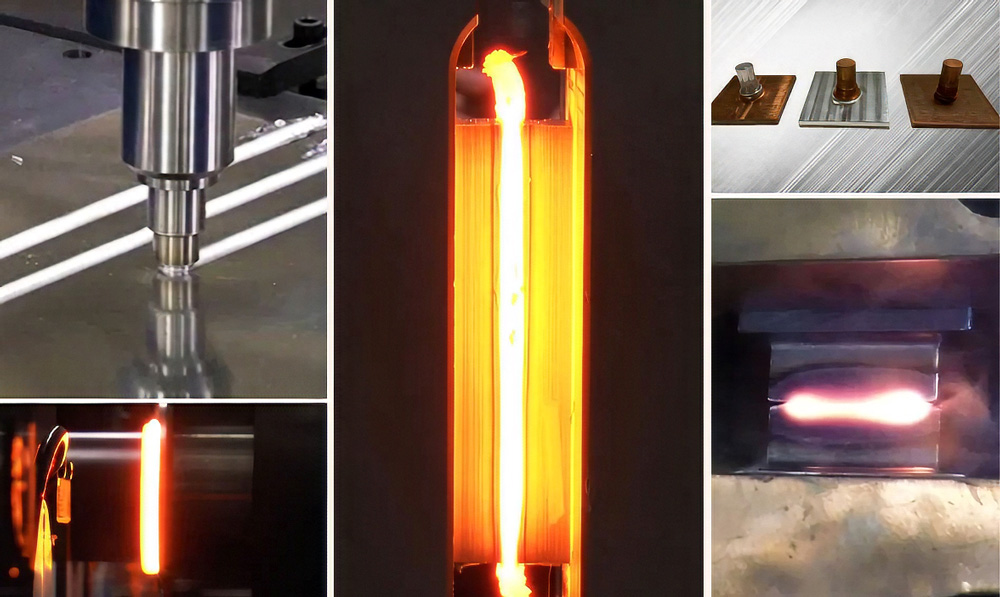
The term “friction welding” covers a family of solid-state joining technologies. Selecting the right modality for your component geometry and production volume drives both capital efficiency and technical feasibility. MTI is the only organization in the world that designs, builds, and deploys all four modalities, and the only one with Low Force Friction Welding production machines operating in global industry.
| Technology | Optimal Geometry | Key Industries | Defining Advantage |
|---|---|---|---|
| Rotary Friction Welding | Tubes, rods, bars, pipes (concentric) | Aerospace, Automotive, Oil & Gas, Agriculture | Unmatched cycle speed; self-cleaning interface |
| Linear Friction Welding | Square, irregular, non-round shapes | Aerospace, Heavy Machinery | Joins complex geometries without custom forging dies |
| Friction Stir Welding | Long flat panels, sheets, extrusions | EV/Automotive, Aerospace, Marine, Rail | Hermetic sealing; eliminates porosity and cracking |
| Low Force Friction Welding | Thin-walled, delicate, intricate components and large diameter parts | Automotive, Medical, Precision Manufacturing | Reduced flash size, reduced post-weld machining, tighter weld tolerances |
The Bimetallic Advantage
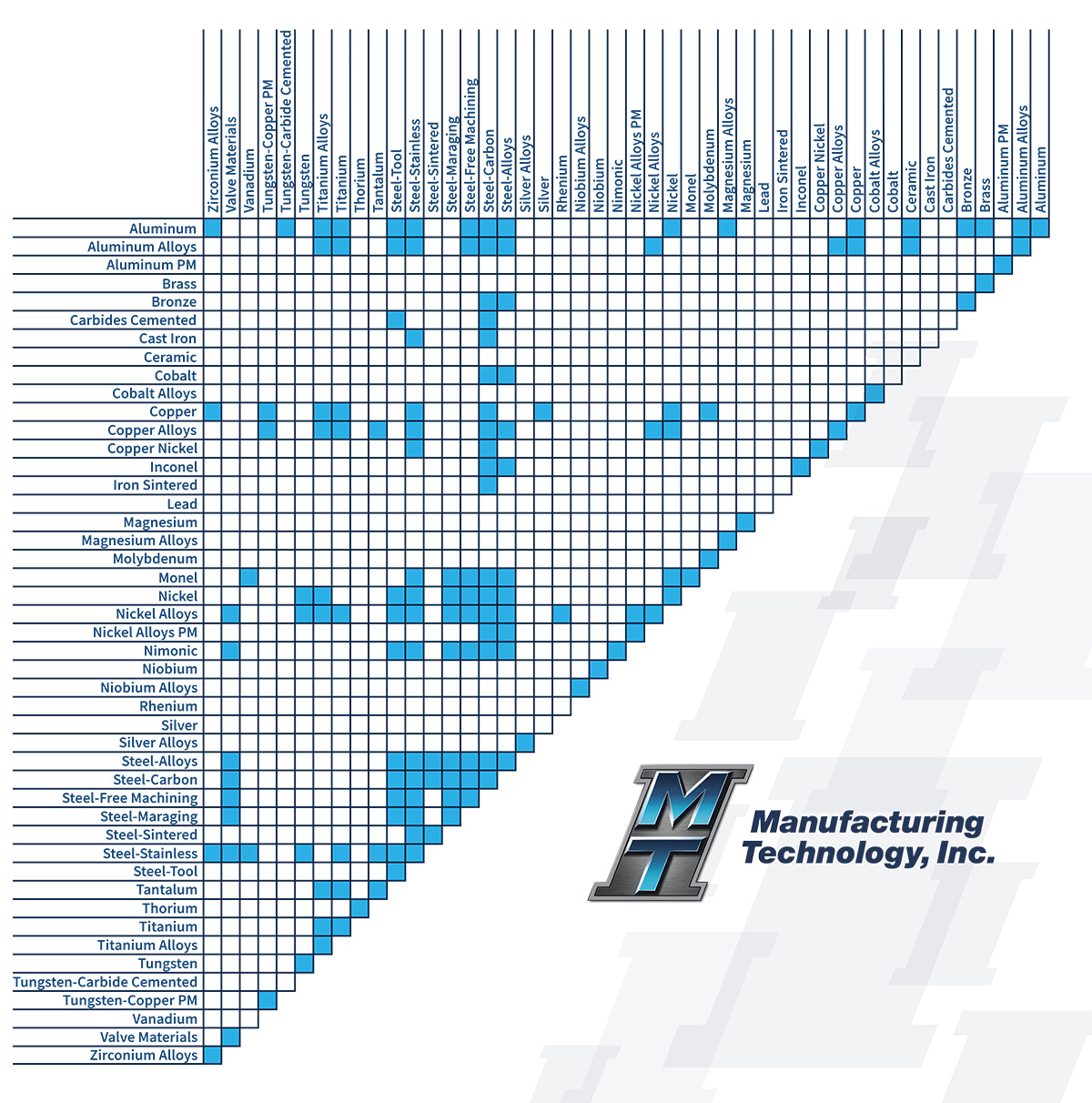
Among the capabilities friction welding offers, bimetallic joining stands out: the ability to permanently bond dissimilar metals. In conventional fusion welding, joining metals with disparate melting points, differing thermal conductivities, or incompatible lattice structures routinely results in brittle intermetallic compounds, galvanic corrosion, post-weld cracking, or catastrophic joint failure.
Friction welding sidesteps this problem. Because the process never enters the liquid state, it avoids the brittle intermetallic phases that cause fusion welding fails on, resulting in a bond that’s structurally sound and metallurgically stable.
Why This Matters for Product Design
Bimetallic joining expands what’s designable. A few examples of what it enables:
- Aluminum-to-steel transitions for light weighting without sacrificing structural integrity.
- Copper-to-aluminum connections for EV battery and electrical systems requiring conductive efficiency.
- Titanium-to-steel joints for aerospace applications demanding both strength and corrosion resistance.
- Stainless steel-to-carbon steel components for oil and gas where cost optimization meets performance.
Parts that previously required expensive monolithic forgings from a single exotic alloy can now be engineered as multi-material assemblies, with each material placed where it performs best.
Procurement Pathways
Adopting friction welding involves a financial decision as much as a technical one. There are two acquisition routes, and choosing between them comes down to production volume, capital availability, and timeline.
Route 1: Contract Manufacturing (OPEX)
Best fit: Variable volumes, R&D and prototyping, short-run batches, supply chain bridge during CAPEX procurement, or when capital budgets are constrained.
Under the contract manufacturing model, you subcontract your friction welding requirements to a certified facility. MTI’s service covers the full scope, from weld development through production to final inspection and shipping. Because MTI provides the surrounding pre– and post-weld processes in-house, there’s no need to coordinate multiple vendors:
- Supply chain management
- Metallurgical evaluation and testing
- Heat treating
- Machining
- Tooling services
You get access to current technology and certified processes without putting an asset on the balance sheet. For teams under immediate pressure (a bottleneck threatening a launch, a compliance failure with an existing supplier, or a design that needs to ship fast), contract manufacturing can be the quickest path from problem to production.
When evaluating contract manufacturing partners, treat the following certifications as hard requirements:
- ISO 9001:2015 – baseline quality management
- AS9100 – mandatory for any aerospace or defense application
- Nadcap Accredited for Welding – supports qualification requirements for critical aerospace programs supply chains
Route 2: Capital Equipment (CAPEX)
Best fit: Consistent, high-volume production where the speed and repeatability of friction welding are required to meet quota over a multi-year program horizon.
Purchasing a capital friction welding machine brings the capability in-house: full process ownership, in-house IP protection, and direct control over throughput and scheduling. Standard machine configurations are typically in the six-figure range. More complex or custom builds vary. Either way, the economics look different once you account for the removal of consumable costs, raw material savings through near-net shape manufacturing, lower scrap rates, and the elimination of secondary machining steps.
Evaluate the investment on Total Cost of Ownership (TCO), not the purchase price alone. With proper maintenance, friction welding machines have a long production life.
There is also a third option worth knowing: purchasing a machine and housing it at MTI’s manufacturing facility, where MTI operates it on your behalf. This gives customers full equipment ownership without requiring in-house operator expertise.
Comply/Non-comply Documents
If your organization has specific technical, quality, testing, or controls requirements, include them in your RFQ and identify which requirements the equipment supplier must meet. Providing these requirements early in the procurement process helps ensure suppliers fully understand your expectations and can accurately evaluate their ability to meet them.
Choosing Between the Two Routes
| Decision Factor | Contract Manufacturing (OPEX) | Capital Equipment (CAPEX) |
|---|---|---|
| Production volume | Variable, prototype, short-run | Consistent, high-volume, long-term |
| Time to production | 2-4 weeks if tooling is available or 6-8 weeks if tooling must be procured | 6-8 months for standard machines, 10+ months for custom machines |
| Balance sheet impact | Operating expense only | Asset depreciation over machine life |
| IP and process control | Managed by contract partner | Fully in-house |
| Capital budget required? | No | Yes |
| Best trigger scenario | Urgent bottleneck; CAPEX blocked; prototype phase | Multi-year program; high-volume recurring runs |
Want to take this guide with you?
Download the complete PDF version for offline reading and sharing with your team.
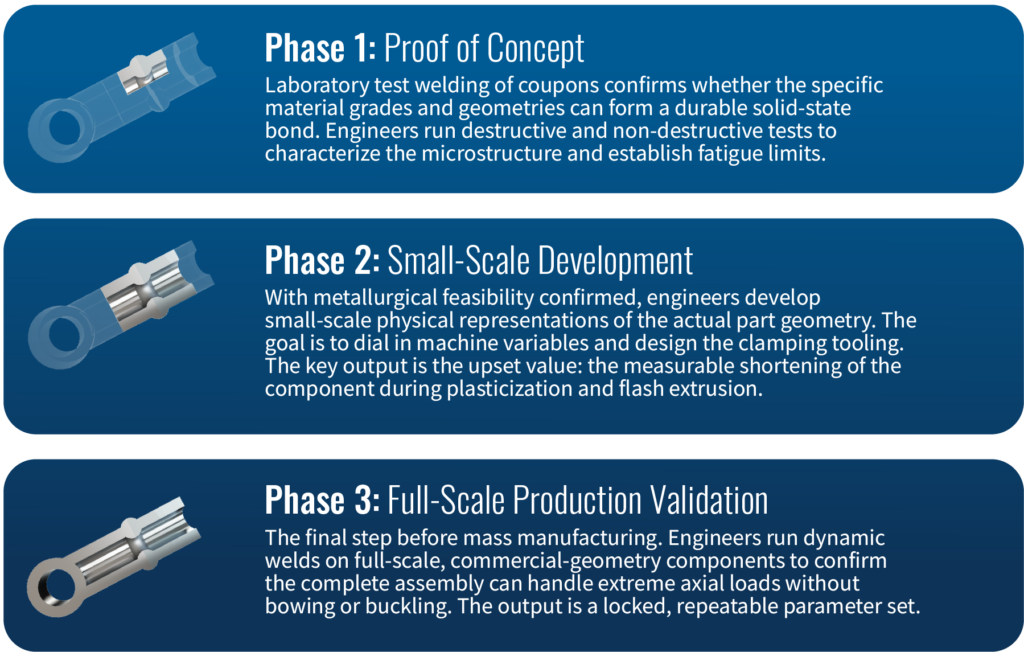
The Weld Development Framework
Whether procuring a machine or using contract manufacturing services, every friction welding program goes through a structured Weld Development process first. It is the step that confirms your parts are fit for purpose before production starts.
Skipping this step introduces unacceptable risk: incorrect machine sizing, unvalidated material compatibility, and parameters that cannot reliably pass inspection under real-world operating conditions.
What to Bring to the First Conversation
| Data Required | Why It Matters |
|---|---|
| Budget considerations | Piece part target price or CAPEX limit will help to determine which path is most suitable. |
| Material specifications | Material types and heat treat conditions dictate required forging forces and confirm compatibility. |
| Dimensional geometry | Part prints or CAD files showing weld interface geometry and overall welded part dimensions. |
| End-use stress environment | The operational load, fatigue limits, and any temperature/pressure extremes it will experience. |
| Production economics | Expected annual volumes and cycle times help determine whether manual loading or automation is suitable. |
Evaluating a Capital Equipment Purchase
When production volumes justify bringing friction welding in-house, the equipment and vendor decision is a long-term one. MTI has friction welders from the 1970s that are still in production service today.
Identifying Key Differentiators Among Vendors
| Differentiator | What to Ask | Why It Matters |
|---|---|---|
| Full modality suite | Do they offer Rotary, Linear, Friction Stir Welding, and Low Force? | A vendor with only one technology may force your part to fit their machine, not match the right technology to your part. |
| In-house metallurgical lab | Can they test HAZ, hardness, and residual stress internally? | An in-house lab validates bond quality without delaying production or outsourcing critical quality data. |
| Active certifications | Do they hold ISO 9001, AS9100, and Nadcap? | For aerospace and defense work, these certifications are hard requirements. |
| Global service coverage | Do they have a dedicated service team with global coverage? | A machine without reliable service support is an unmanaged asset. |
| Proprietary technology | Do they hold patents for their innovations? | Patented technology signals genuine R&D investment and provides documented sole-source justification. |
Factoring in Tooling and Fixturing Costs
Friction welding generates significant mechanical force, and components require rigid, specialized clamping to handle the rotational torque and axial pressure. Custom tooling is a real engineering effort and a meaningful cost item in the project budget. Ensure the vendor includes the design, build, and integration of all bespoke clamping fixtures.
Facility and Infrastructure Requirements
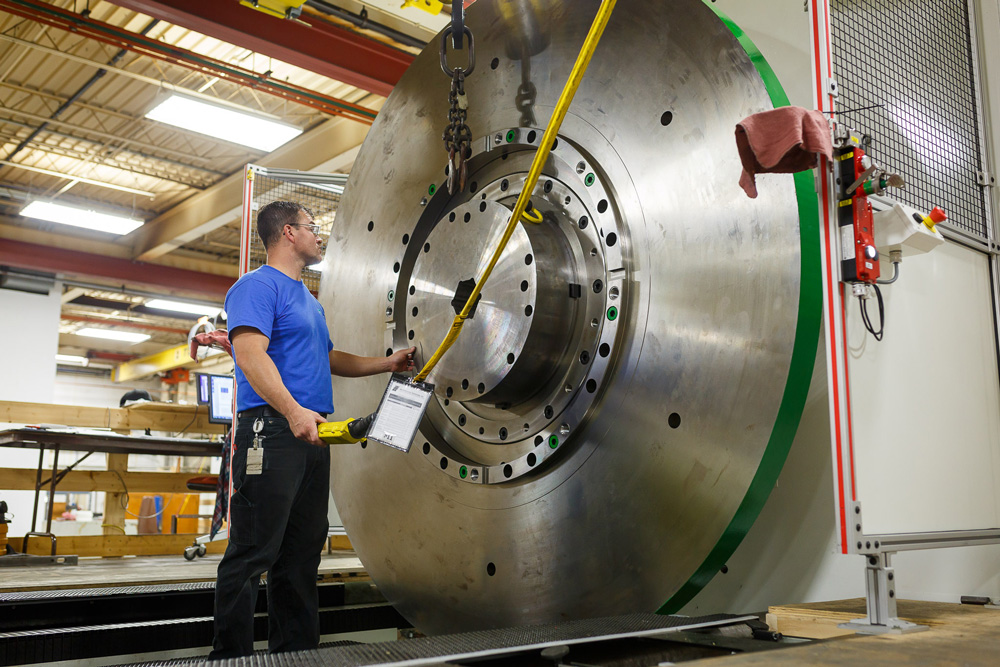
- Foundation and flooring: Large-scale machines may require specialized isolation pads or a dedicated concrete pit.
- Electrical supply: Machines require a three phase, high voltage industrial power drop.
- Hydraulic infrastructure: Hydraulic fluid is cooled either by air or water heat exchangers, and a stable compressed air line is normally required.
- Floor space: Machine foot print configuration, service access, and material flow need to be planned carefully.
Training and Ongoing Support
Three Tiers of Preventive Maintenance
| Tier | What’s Included |
|---|---|
| Bronze | Foundational preventive care, including one on-site visit, two hours of remote access, and discounted parts and service. |
| Silver | Adds one more on-site visit and three additional hours of remote access. Technicians will also check hydraulic pressure settings and evaluate machine logs. |
| Gold | Most comprehensive, adding an additional on-site visit and five more hours of remote access, focusing on optimization by checking spindle alignment and run-out. |
Navigating Internal Pushback
Introducing friction welding to a buying committee produces predictable objections.
The Reframe: Friction welding machines are highly engineered pieces of equipment that require adequate build time. If your timeline requires faster procurement, our Contract Manufacturing Services can serve as an immediate operational bridge.
The Reframe: Run a full TCO comparison, not a sticker price comparison. Fusion welding carries costs that don’t show up in a capital line item: shielding gas, filler wire, flux, pre-weld prep labor, post-weld corrective machining, and scrap. If CAPEX is genuinely off the table, contract manufacturing is an OPEX option.
The Reframe: If the volume math doesn’t support a long-term depreciation cycle, contract manufacturing may be the answer. It gives immediate access to the technology, removes the bottleneck, and keeps the capital risk off the table.
The Reframe: Rotary friction welding does require concentric parts. But that’s one of four modalities. Linear Friction Welding handles square, irregular, and non-round geometries. Friction Stir Welding covers long flat panels and extrusions. Low Force Friction Welding works with delicate and thin-walled components.
The Reframe: MTI maintains ISO 9001, AS9100, and Nadcap welding accreditations. In many cases, the greatest risk is not sole sourcing itself, but selecting a supplier without the experience, certifications, or track record required to support long-term program success.
The Reframe: Fusion welding carries process variability by design: the output depends on the operator. Friction welding runs under closed-loop machine control. The locked parameter set that comes out of the Weld Development process is auditable and consistent in a way a manual fusion process cannot be.
Structuring The Engagement
Understanding what the commercial and technical onboarding process looks like up front saves time and avoids surprises during the engagement.
What Commercial Agreements to Expect
- Mutual Non-Disclosure Agreement (MNDA): Signed before blueprint sharing, technical feasibility discussion, or weld development starts.
- Purchase Order and Terms & Conditions: Governs the engagement once the project proceeds, covering IP boundaries, inspection protocols, and payment terms.
Questions to Ask Any Friction Welding Partner
- Which modalities do you design, build, and operate in-house?
- Do you maintain an in-house metallurgical laboratory for HAZ analysis, destructive testing, and certification?
- What certifications do you hold, and are they current?
- Walk me through your Weld Development process: the phases, what testing happens in each, and what you deliver at the end.
- What does your Service Package offering include?
- Can you support both contract manufacturing today and capital machine supply if our volumes grow?
Conclusion
Organizations that evaluate friction welding are generally after the same thing: confidence that the process works, the parts pass, and the investment pays off.
That means confidence in the weld holding under operational stress. Confidence in the process repeating at volume. Confidence that parts will pass a quality audit. And confidence that the investment pays back.
The organizations that adopt friction welding successfully come in with solid technical data, treat the supplier relationship as a partnership, and build their internal business case on total cost of ownership.
Talk to an expert about your weld development questions.
We’re here and ready to talk about your project. Let us help you find the right solution.
Want to take this guide with you?
Download the complete PDF version for offline reading and sharing with your team.
Friction Welding Buyer's Guide
A Practical Resource for Engineers, Operations Leaders, and Procurement Teams