Can Inconel Be Welded With Steel?
Yes, you can weld Inconel to steel. However, you need to choose the welding process carefully.
Steel and Inconel may look similar, but metallurgically, they are two very different materials. They have different melting temperatures, densities, forgeability, and thermal expansion rates. Because of these differences, joining steel and Inconel through traditional welding methods can be difficult and, in some cases, often impossible to do reliably.
Conventional Inconel welding may require specific nickel-based filler rods or welding filler wire to help prevent cracking and manage the way these dissimilar metals respond to heat. Even with the right filler, maintaining joint quality, strength, and mechanical properties can be challenging.
Friction Welding Inconel and Steel
Friction welding is one of the best ways to weld Inconel with steel and other dissimilar metals because it does not require the base materials to melt. Instead, this solid-state welding process uses frictional heat to plasticize the weld interface, followed by controlled axial pressure to forge the materials together.
The result is a high-integrity joint with a refined microstructure formed through dynamic recrystallization. With this Inconel welding procedure, manufacturers can join steel, carbon steel, nickel-based alloys, and other metals.
Unlike conventional fusion welding methods used for Inconel components and castings, friction welding does not require filler metal and typically requires only minimal surface preparation. Instead, controlled motion generates frictional heat while axial pressure forges the materials together, creating a high-integrity solid-state bond without melting the base materials.
For applications that require additional heat control, Low Force Friction Welding can be used. This friction welding technology applies a controlled external pre-heat source to the joint surfaces, keeping the welding procedure within defined parameters while reducing the axial pressure required to form the bond.
But why is the combination of Steel and Inconel so popular among several industries?
Let’s take a look at some of the most common applications:
Inconel Metal Welding for Turbochargers
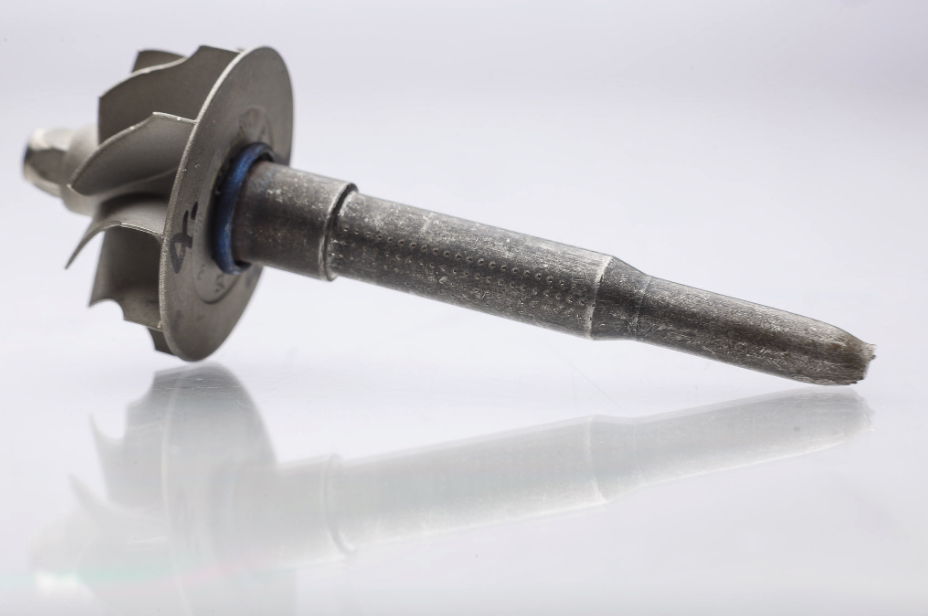
Turbochargers are one of our most popular bimetal parts.
To achieve optimal performance, the shaft needs to be made of a wear-resistant, hardenable steel and the wheel needs to be made of a heat-resistant, high-strength material. For this application, Steel is an ideal choice for the shaft and Inconel for the wheel.
If a turbocharger was completely made from steel, the wheel would get too hot and wear down too quickly.
On the other hand, if a turbocharger was made completely from Inconel, the stem would experience much more wear and tear. The heat-resistance of Inconel is strong, but it simply does not have the durability of steel.
Friction welding is the best solution for this application because materials don’t melt during the process, creating a stronger weld.
Welding Inconel to Steel for Engine Valve Parts
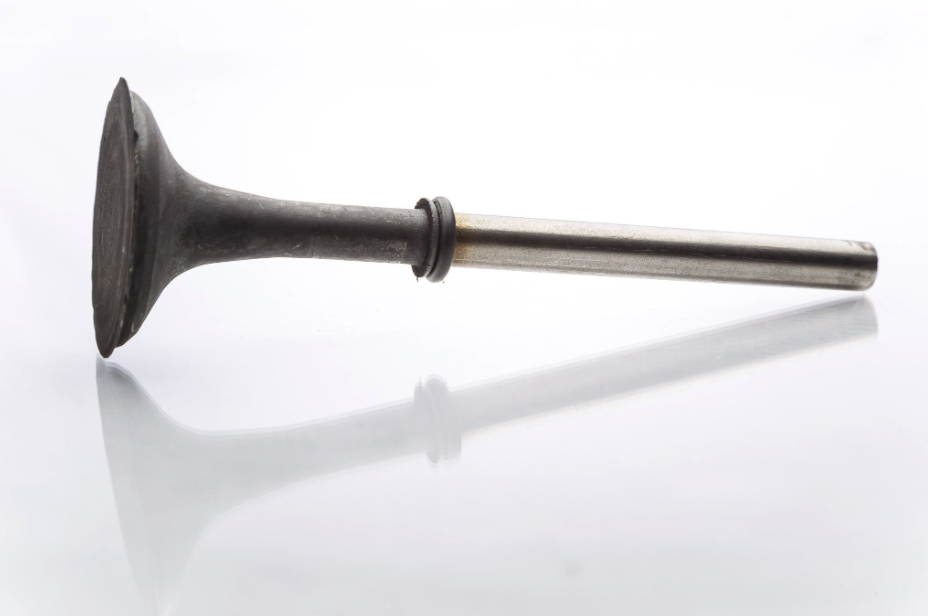
The combination of Steel and Inconel is also ideal for engine valves. A critical part of a combustion engine, engine valves are exposed to a lot of heat on the flat side, or the head. Meanwhile, the stem gets more contact with other components. For similar reasons we would combine Steel and Inconel to make a turbocharger, this combination is also favorable for engine valves because no melting occurs.
Aside from durability, friction welding can also lead to lower costs and less wasted material for our customers. The process allows us to leverage a near-net shape component with the material properties exactly aligned with where the customer requests them.
There are countless other ways we can use bimetals to benefit our customers. Check out this video below, highlighting some of our most popular bimetallic combinations and to learn how they could bring value to your production line:
Why Partner with MTI for Inconel Welding Services
MTI has decades of experience joining bimetallic applications. As the friction welding experts, MTI has the knowledge, know-how, and quality certifications to solve your manufacturing problems and has more than 300 years of combined friction welding experience. We’ll build a machine that makes your part, we’ll make the part for you, or we’ll help make your part even better.