
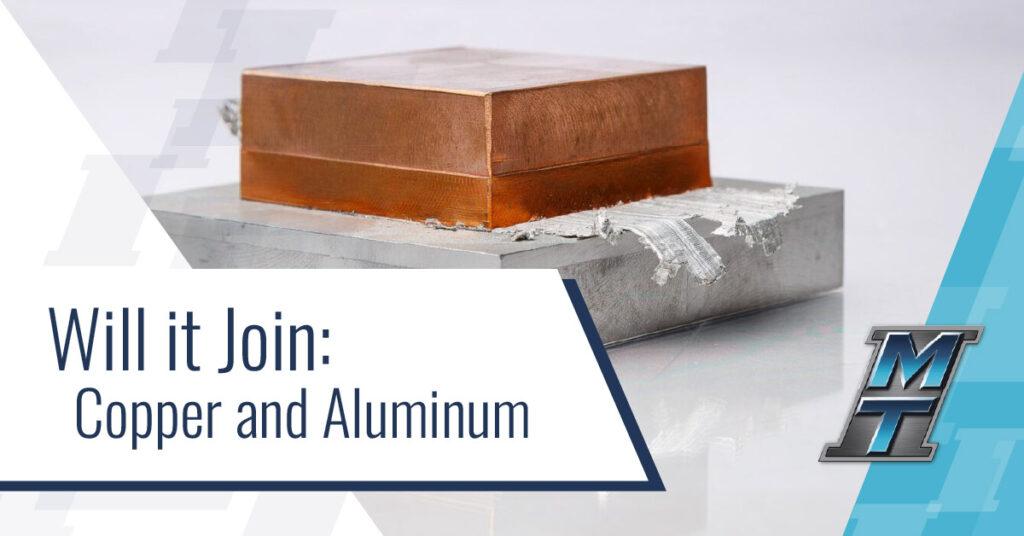
Can You Weld Copper to Aluminum With Friction Welding?
Friction Welding has become the premier choice for companies looking to join dissimilar metals. Because Friction Welding is a solid-state joining process that does not require melting, it allows for the bonding of two metals, such as Copper and Aluminum, that may be impossible to join with more traditional welding techniques.
With fusion welding processes like MIG and TIG welding, it can be challenging to join dissimilar metals because they often differ substantially in composition and physical, mechanical, and metallurgical properties.
Copper and Aluminum have drastically different melting temperatures. The copper melting point in Fahrenheit is 1,984°F. Meanwhile, Aluminum has a melting temperature of 1,221°F. This means that if you were to join the two materials using fusion processes, you would run the risk of overheating and weakening the aluminum. In fact, with fusion processes, you will always change the material properties of one or both materials due to melting. Even though it’s sometimes done in industry, TIG welding copper to aluminum is not considered a viable process.
So, how do we more efficiently join these two materials?
Friction welding is the most effective bimetallic joining technology available. With friction welding, the welds are of forged quality, and the materials are plasticized rather than melted, creating higher-strength welds than fusion processes. Plus, a properly developed friction weld will not develop galvanic corrosion, also known as bimetallic corrosion, around the joint.
Common Friction Welding Copper to Aluminum Applications
Here are three common friction welding applications for copper to aluminum combinations:
1. Linear Friction Welding Solutions for Copper to Aluminum Heat Exchanger Plate
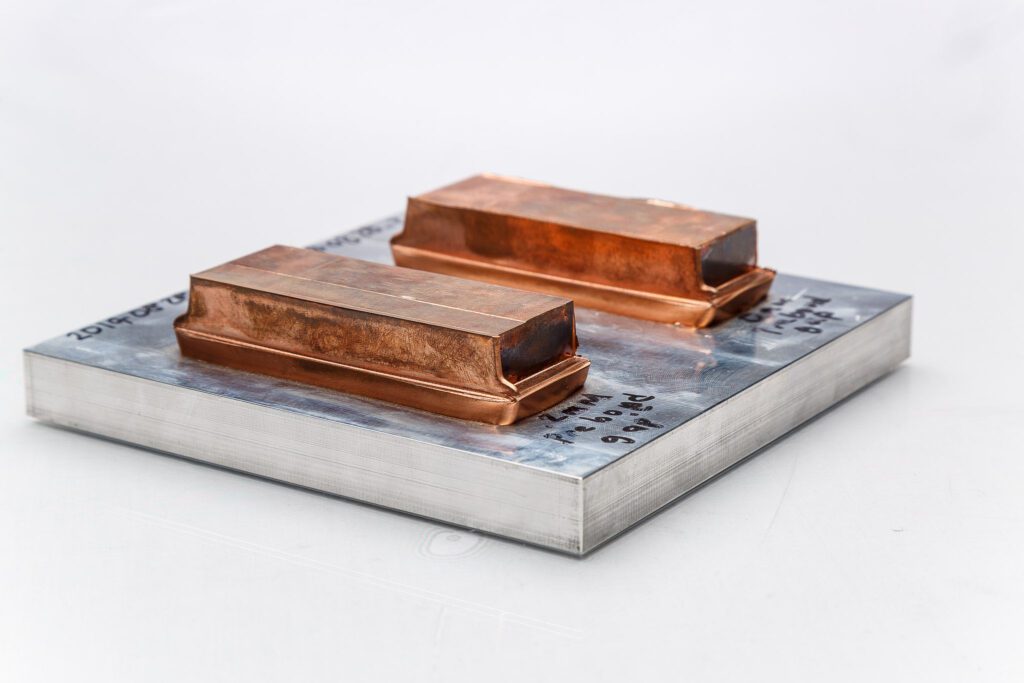
Using Linear Friction Welding, MTI joins copper to aluminum to form heat exchanger plates for vehicles. While copper transfers heat faster than almost any other metal, copper doesn’t mount to other surfaces very well or very rigidly. So, copper is welded to aluminum, allowing the aluminum to be used as the mounting surface.
2. Rotary Friction Welding for Copper to Aluminum Electrical Components
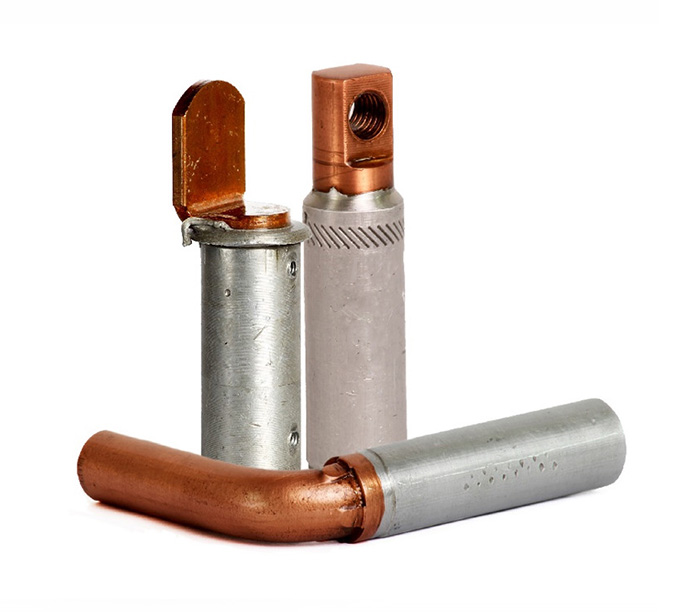
MTI uses Rotary Friction Welding to join aluminum alloys to copper alloys for electrical connectors. Friction welding copper to aluminum electrical components allows you to get the benefit of copper’s heat transfer properties combined with the cost-saving benefits of aluminum.
3. Rotary Friction Welding Solutions for Copper to Aluminum Battery Cables
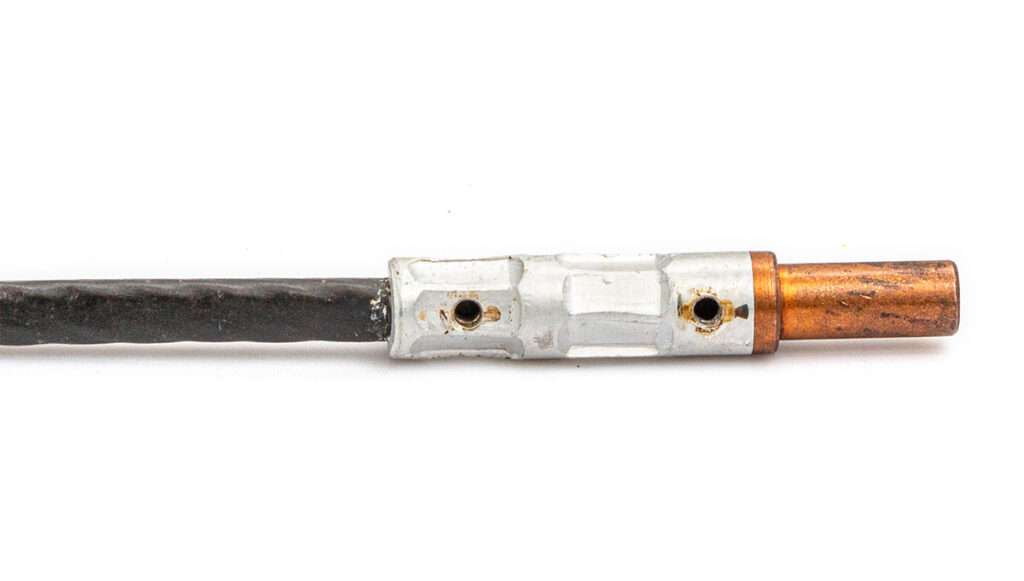
MTI also uses Rotary Friction Welding to join copper to aluminum for battery cables. In this case, copper and aluminum are both ideal for different reasons. Copper provides high electrical conductivity with little resistance while aluminum is a much lighter metal. By substituting heavier metals for aluminum when applicable, we’re able to reduce the weight of the final vehicle, which is referred to as lightweighting. That’s why combining aluminum with other materials has become a critical aspect of automotive production.
4. Friction Stir Welding Solutions for Copper to Aluminum Seam Plating

MTI uses Friction Stir Welding to create seam or butt welds between copper and aluminum plates. During the FSW process, a rotating tool travels along the joint line, generating frictional heat while the two materials remain in contact.
Rather than melting the base metals, Friction Stir Welding plasticizes and stirs the copper and aluminum across the weld interface, forming a solid-state bond within a single joined plate. This makes FSW a strong option for applications that require conductive performance, material efficiency, and consistent weld quality between dissimilar materials.
Why MTI for Your Copper and Aluminum Part Projects?
MTI has decades of experience joining bimetallic applications. As the friction welding experts, MTI has the knowledge, know-how, and quality certifications to solve your manufacturing problems and has more than 300 years of combined friction welding experience. We’ll build a machine that makes your part, we’ll make the part for you, or we’ll help make your part even better. Contact us to start!